Blog

Featured

Why should I pay taxes?

Besides paying penalties, interest, criminal prosecution and reputational damage, I have listed a few reasons for paying taxes in full and on time:

The usual ones are:

1. Taxes fund public services like roads, NHS, schools, transport systems etc.

2. Keeps us safe by funding police, justice system and armed forces.

3. Safety net – helps people in case of job loss, sickness and old age.

4. Directs behaviour – like high taxes on cigarettes, alcohol and fuel duty.

5. Helps target resources towards disadvantaged areas by tax incentives.

6. Wealth distribution – transferring wealth from the wealthy to the needy. Prime example is inheritance tax, this ensures wealth is not perpetuated through generations and creates a more equal society.

Basically price of living in a civilized society. Reason a person is successful is the support system a civilized society provides them.

Now some novel ones, equally relevant:

7. Basis of fiat money – one of the main reasons of value of fiat money is that government accepts it for paying taxes. Fiat money enables the government to control the economy. To read more on the topic of fiat money go to Section 3 `The Return to the Gold Standard` of Essays in Persuasion by John Maynard Keynes, one of the most influential economists of 20th century.

8. Paying a fair share of taxes gives the taxpayer the moral authority to question lawmakers.

9. Basis of democracy. In historic times in England when kings wished to raise funds for their wars; they needed to call in Parliament to raise taxes. Parliament (especially the Commons) developed over the centuries giving universal franchise. This today gives us the right to chose who governs us and how.

But it is a social contract. People pay their taxes and governments govern them prudentially.

Often when governments become corrupt people are disinclined to pay taxes.

Thus, taxes keep peace and harmony and help create a better society.
Featured

Unexpected accountants

Below is a list of unexpected individuals who were accountants.

  • Chitragupta – According to Hindu mythology he keeps a record of all deeds – good and bad and their balance decides whether we go to heaven or hell.
  • Sir Isaac Newton – In later life, he was master of Royal Mint for 30 years. He oversaw the Great Coinage of 1696 when counterfeit currency was rife. It is said he was an honest man when corruption in public life was widespread. He lost a fortune in South Sea Company Bubble. He is also credited, perhaps mistakenly, for moving England from bimetallic system to Gold Standard. Seeing England prosper other countries adopted Gold Standard. There is a fascinating BBC radio play about his time in Royal Mint.


I will try and improve this list as I meet other characters on my accounting journey.

Bonus

  • Jesus was born in Bethlehem when Mary and Joseph visited it for paying their taxes. Luke 2:1-8.

VAT Repayment Return

How to be prepared

First VAT return is usually of repayment. I have listed below actions you can take to make the process easier .

  1. File early to get monies early.
    Do not wait for the deadline. HMRC processes repayment within 30 days of VAT submission date, not deadline date, so earlier you file earlier you will get repayment in your bank account.
  • Use HMRC online tool to check VAT repayment status: link
  • Email address of HMRC VAT repayment team given below, but do not chase them before 30 days.

vatfirstperiodrepaymentclaims@hmrc.gov.uk

  • Prepare to submit supporting paperwork online and then wait for the letter with Case reference.
    You can use this service to check on documents required to ensure all are available while preparing VAT return. HMRC will send a letter in post requesting paperwork to support the repayment like invoices, bank statement etc. Previously we had to send everything by post but now it’s done online. You can start preparing immediately and once letter with Case reference is received, submit the form.


Send details to support your VAT repayment claim – GOV.UK

Agent can complete this form on behalf of the client.

Source:

  1. VAT repayments: Overview – GOV.UK

Dividends from Authorised Investment funds (AIF)/OEIC

Dividends

In the hands of an investor (unit holder) within the charge to IT, dividend distributions are treated in the same manner as any other UK company dividend.1

Equalisation is returned capital sum. As it is a capital receipt, it should be deducted from the unit holder’s cost of the units for CGT purposes. 2

It should not be treated as a capital distribution. It is a return of the initial price paid and it should therefore be deducted from the price paid when computing the chargeable gain on the eventual disposal. 3

Calculation for tax return

Dividend

Tax payer usually receives a Tax Certificate from his Broker showing both dividends paid and equalisation figure. Dividend figure included equalisation, so we need to deduct equalisation figure to get to the Dividend figure that needs to be reported in the tax return.

Capital Gain

Equalisation should not be treated as a capital distribution. It is a return of the initial price paid and it should therefore be deducted from the price paid when computing the chargeable gain on the eventual disposal. 3

Tax Return

UK Company Dividends are put in Box 4 and AIF distributions Box 5 of SA100 TR3.

Notes:

  1. IFM03350
  2. see IFM02230 for an example
  3. CG57705

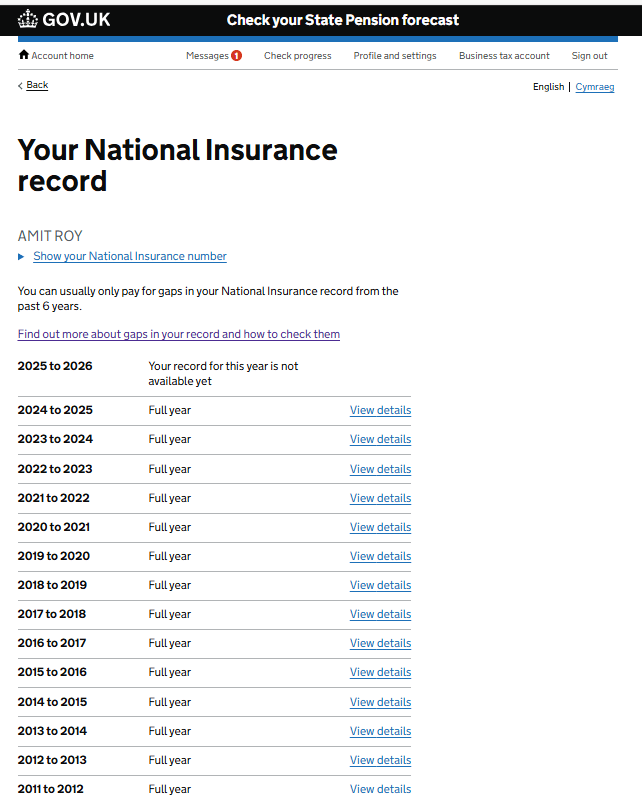
Check your National Insurance record

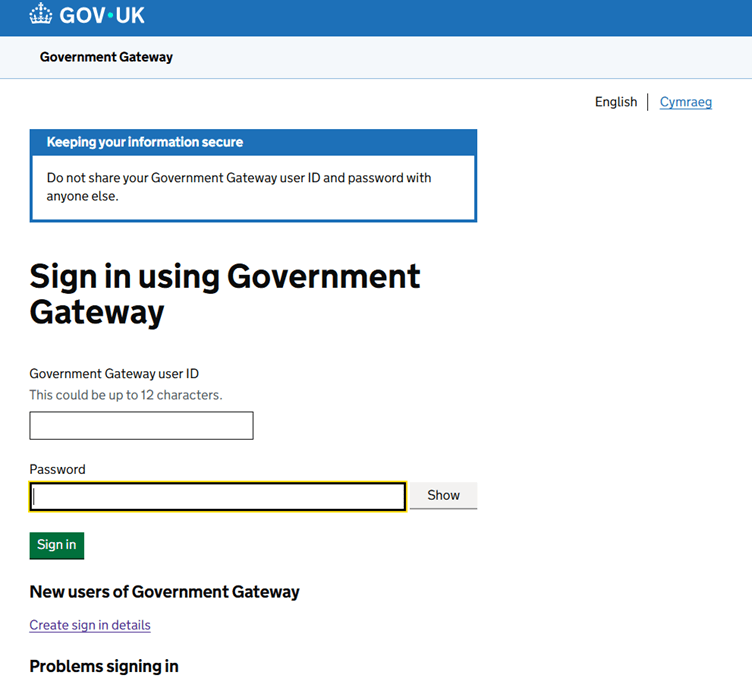
Step 1: Login into your Personal tax account; using link

https://www.gov.uk/personal-tax-account

Step 2: Click `National Insurance and State Pension`

Step 3: Check out both links below:
               State Pension Summary
               National Insurance record

Step 4 : Check all years to show `Full year`.

Registering a company as employer with non-UK resident director

Overseas directors and PAYE;
Email address of HMRC Employer helpline

Registering a company as an employer where Directors are from overseas and do not have a National Insurance number.

We need to call HMRC on 0300 200 3200.

Before calling gather following information:

Email of Employer helpline : employer.helpline@notifications.hmrc.gov.uk